Case Study
Mill Street Substation
Location Nelson, British Columbia
Project Cost $9.24M
Scope
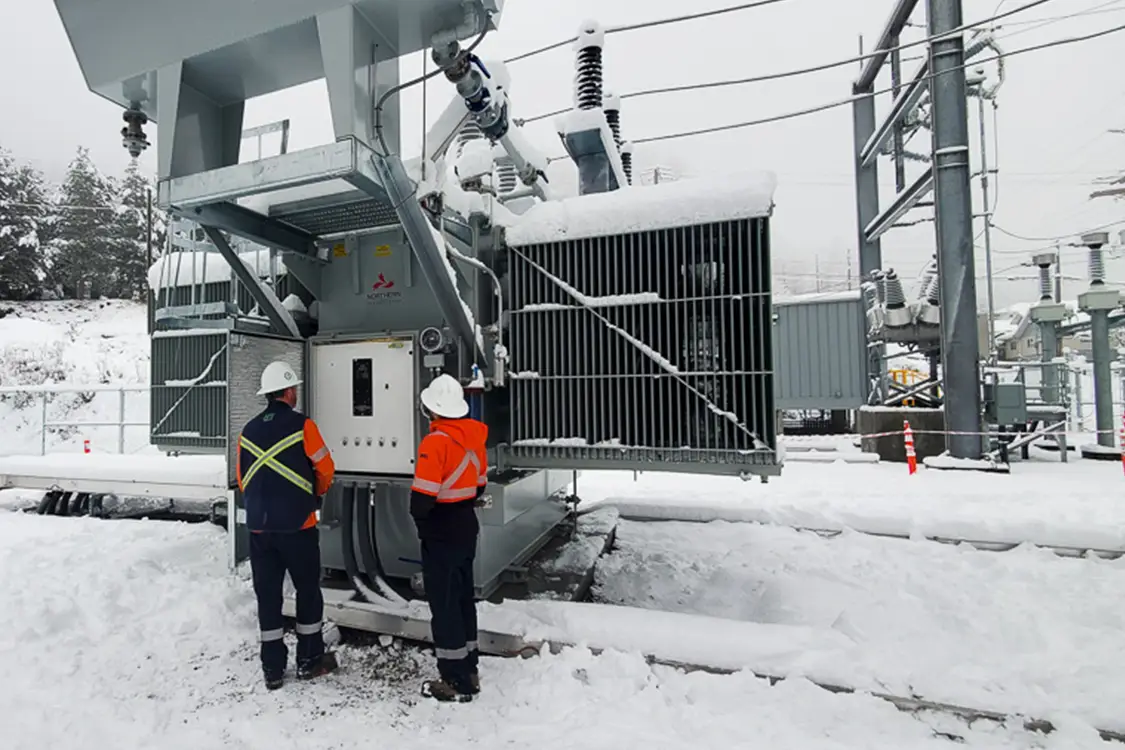
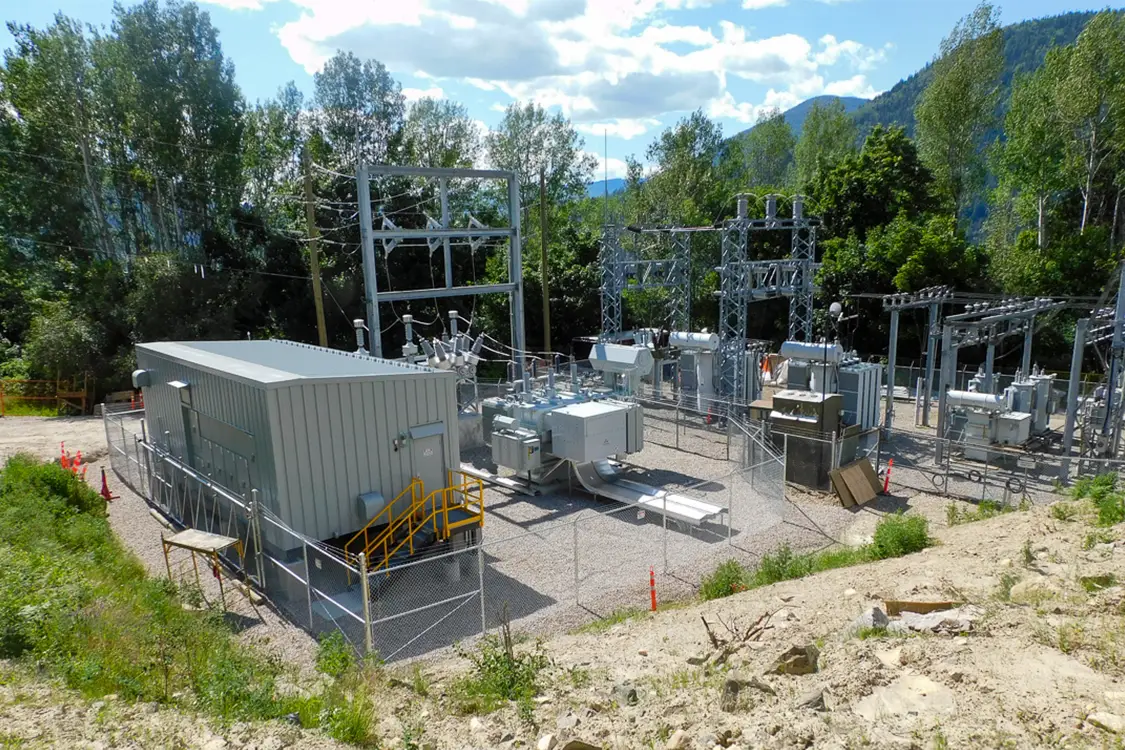
The Mill Street Substation, serving the City of Nelson, required an upgrade due to aging 42-year-old infrastructure. The need for replacement became more urgent following a transformer failure caused by wildlife interference. The project focused on replacing the failed transformer, improving power reliability, and increasing capacity to meet future load growth.
Primary was selected by Nelson Hydro to provide comprehensive engineering services for the project. The scope included defining the architecture for a brownfield substation replacement, along with structural and civil engineering for foundations and steelwork. The electrical design covered electrical apparatus layout and specifications, conduit and cable schedules, power system studies – including grounding, lightning, load flow, short circuit analysis, and transient modeling. Additionally, the project involved developing the communications and control architecture, ensuring seamless SCADA integration for efficient system management.
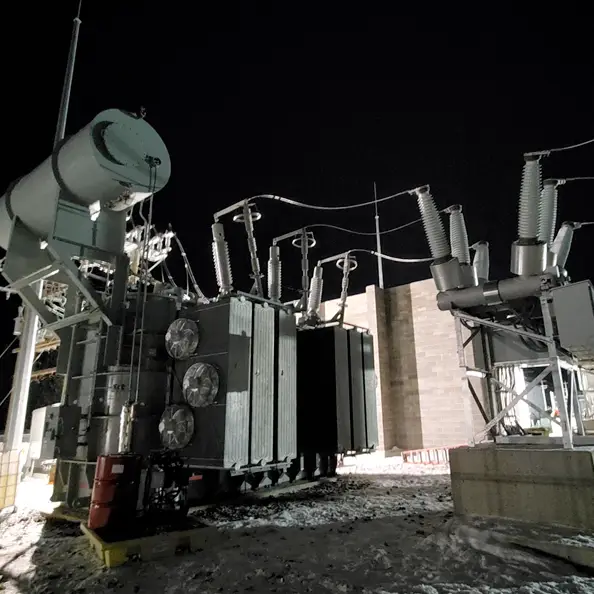
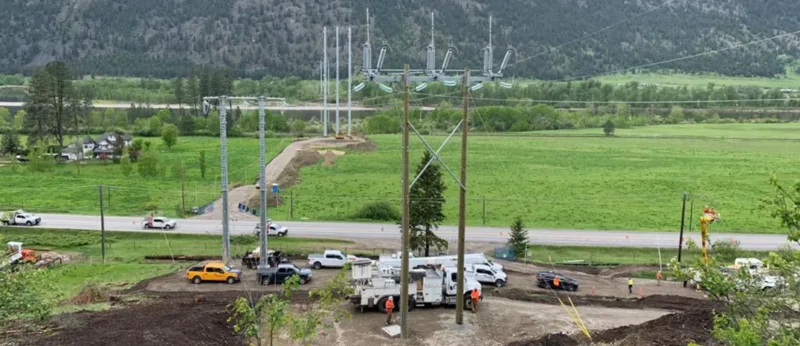
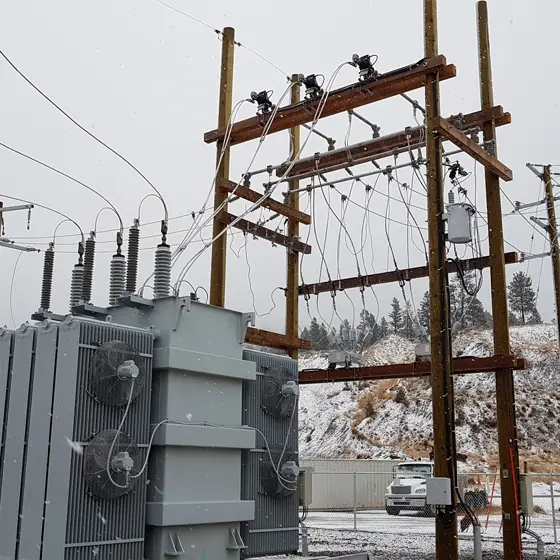
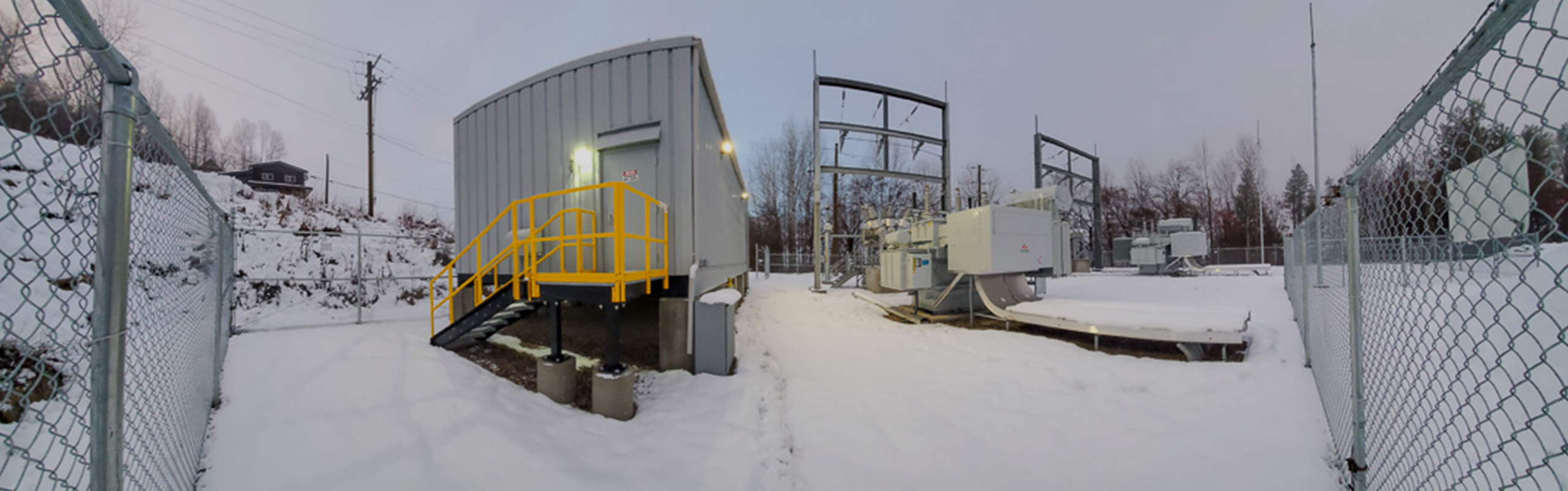
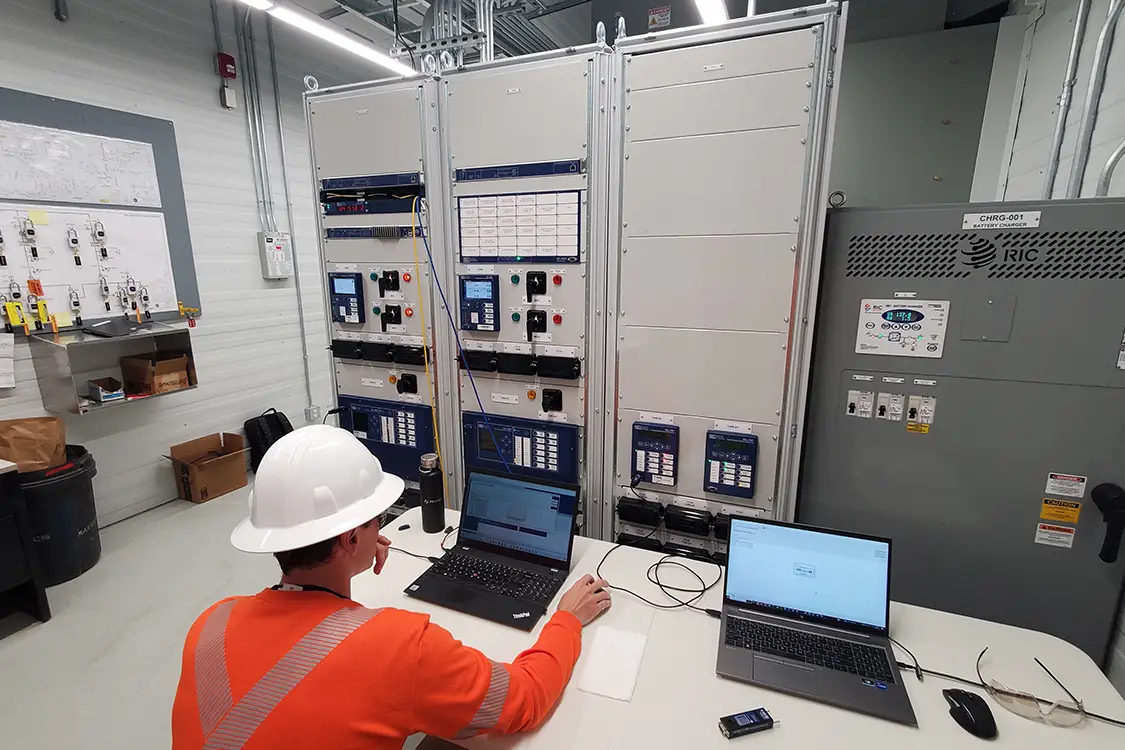
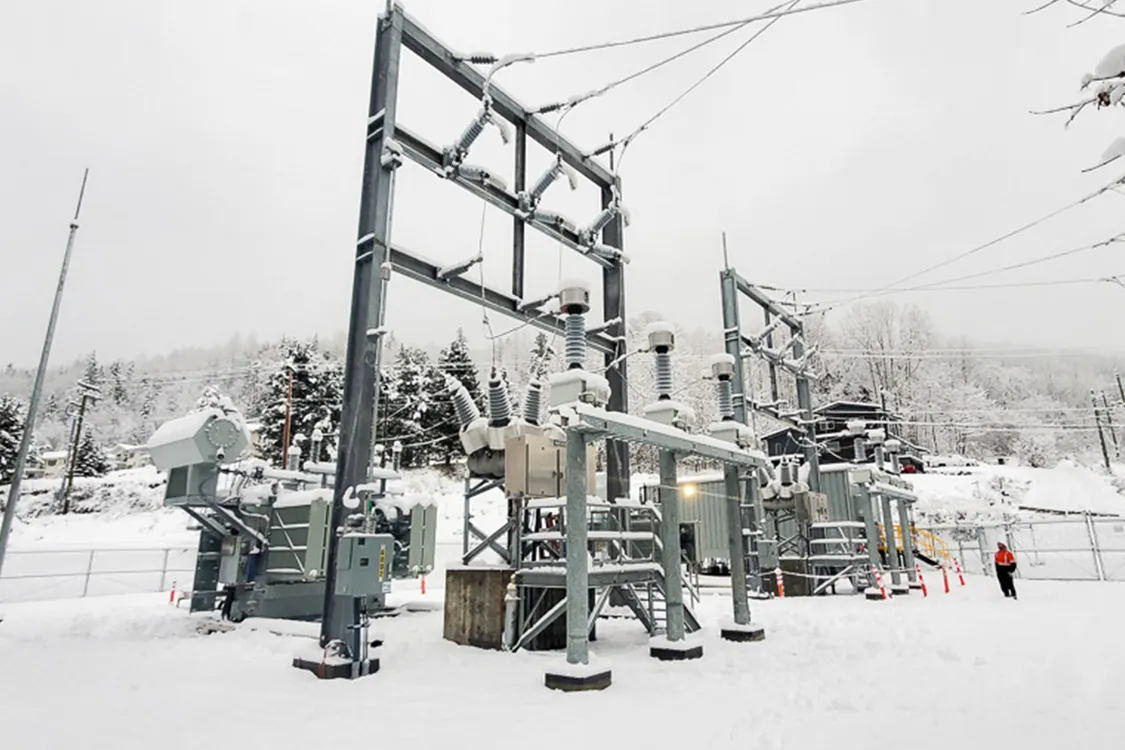
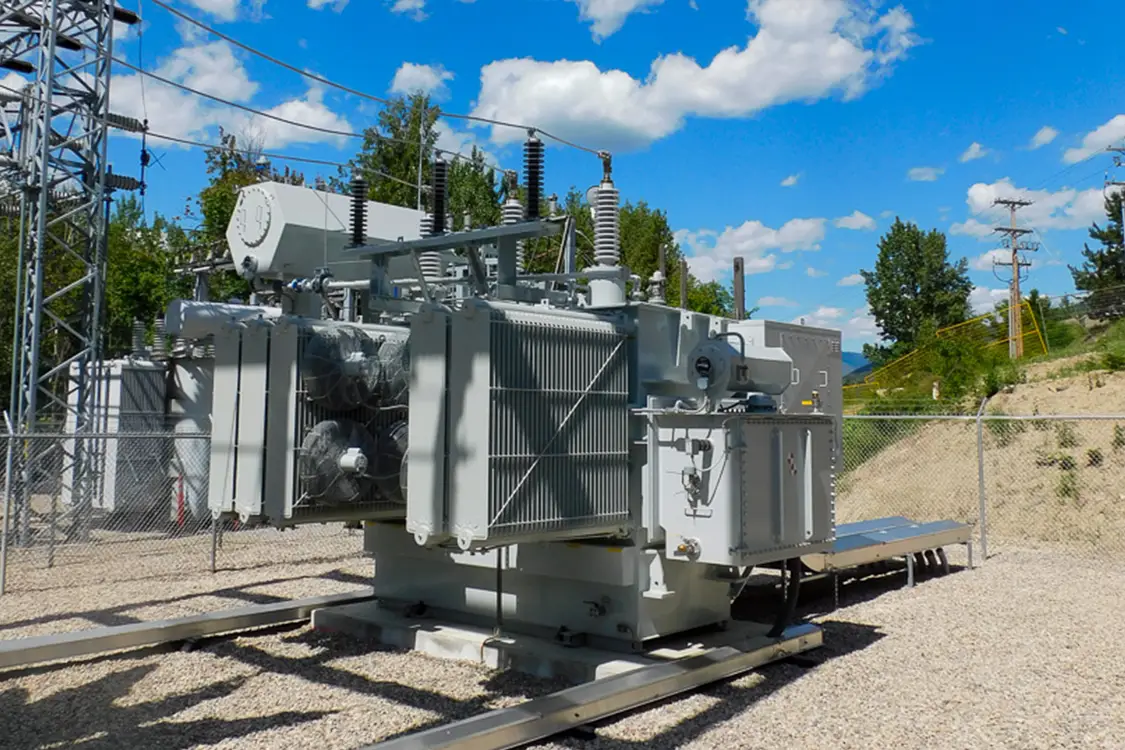
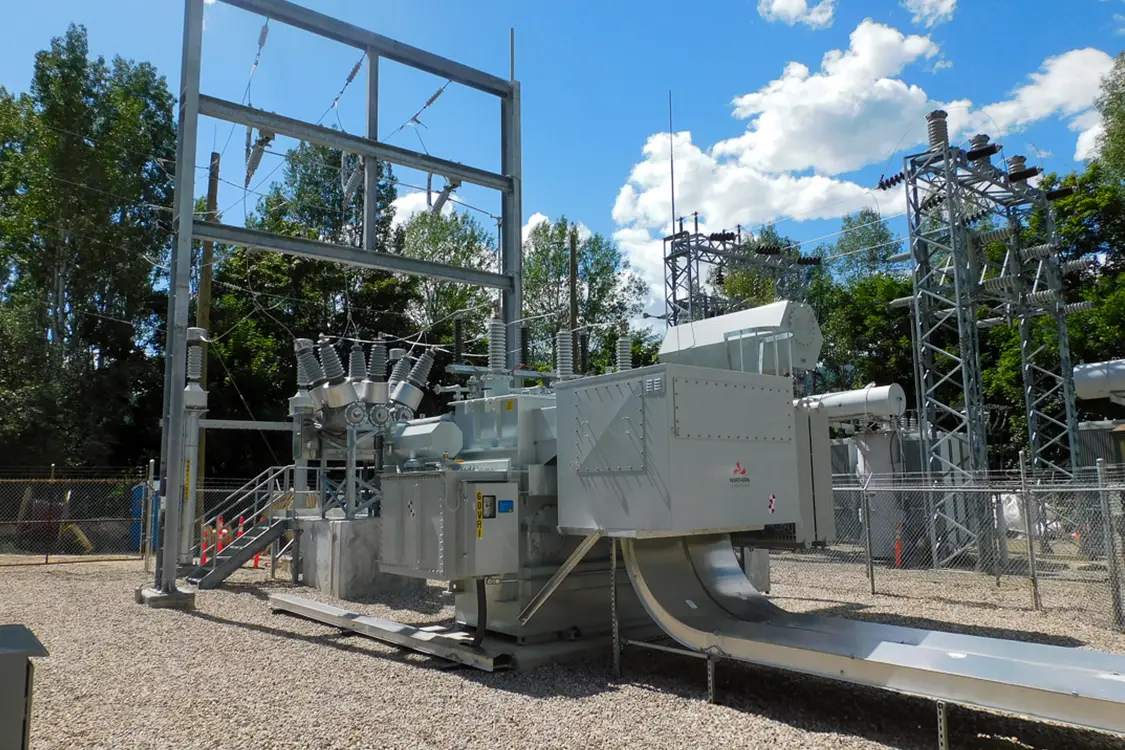
The project design included outdoor high-voltage transmission structures, two large power transformers, and a state-of-the-art electrical house (E-House) that safely enclosed advanced switchgear. Modern protection systems, real-time power monitoring, and smart communication technology reduced wiring and improved efficiency and reliability.
| Challenges | Solutions |
|---|---|
| Keeping the existing power transformer and medium voltage (MV) systems operational during the substation upgrade. | Construction was divided into two stages. Stage 1 involved installing key components, including the 63kV entrance structure, a disconnect switch, a circuit breaker, the first transformer (T1), and a new E-House which housed protection controls and arc-resistant MV switchgear. Stage 2 added another set of 63kV equipment and the second transformer (T2). This two-stage approach allowed a seamless upgrade with minimal disruption to the power supply. |
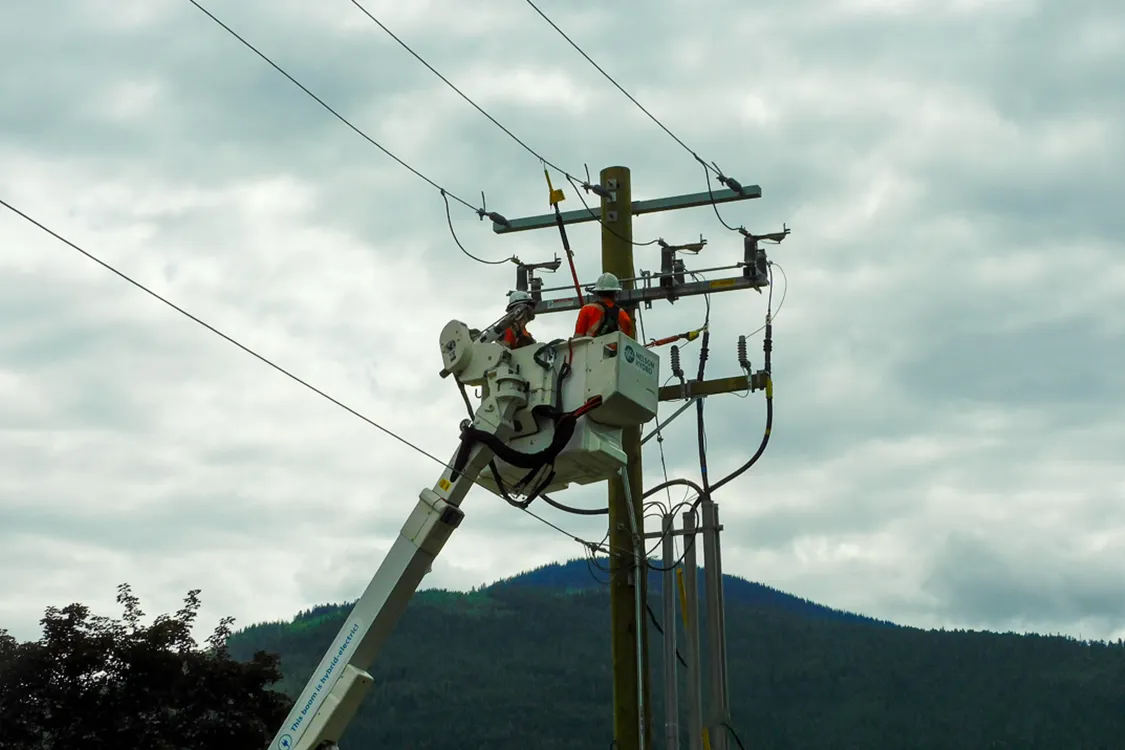
| When connecting the new 25kV system to the station, the phases didn’t align correctly, creating a critical issue that could destabilize the system. | The team developed a transient analysis model to simulate conductor swaps and analyze phase relationships, uncovering incorrect phasing at the station. Using this insight, we adjusted the conductors and cable connections, achieving proper alignment and ensuring a stable system integration. |

“Primary was solid to work with throughout the project. Their responsiveness kept things moving without delays waiting on engineering feedback. They were realistic about the commissioning challenges and allocated resources well to handle any issues as they came up. They followed through on their commitment to provide support through to energization and beyond.”
Kevin D’Netto, P.Eng. | Electrical Power Systems Engineer | Nelson Hydro
The Result
The success of the Mill Street Substation upgrade highlights the expertise, innovation, and collaboration of our team. Through careful planning and a staged approach, we minimized interference with existing facilities while implementing strategic modifications, such as adjusting T1 oil containment and rerouting medium-voltage feeder cables for seamless integration. This upgrade not only enhances operational efficiency and reliability but also increases capacity to support future growth and integrates advanced communication technologies for streamlined operation. Now serving approximately 6,000 customers, the Mill Street Substation stands as a model for modernized, scalable power infrastructure and showcases the value of proactive planning, innovative problem-solving, and collaborative execution.
Related Projects
-
100MVA 138kV:25kV substation and 25kV distribution system to feed the client’s datacenter facility.
-
Primary engineered a 723-meter self-supported span across the North Thompson River Black Pines, BC to serve the growing energy demands in the region
-
Primary designed and supported the construction of a 30 MVA substation expansion for a cryptocurrency